Religious festivals, known locally as Tshechus, represent the living heart of Bhutanese culture and spiritual life. Held annually in historic courtyard dzongs and monasteries across every district, these colorful events honor Guru Rinpoche (Padmasambhava), the precious master who introduced Tantric Buddhism to Bhutan in the 8th century.
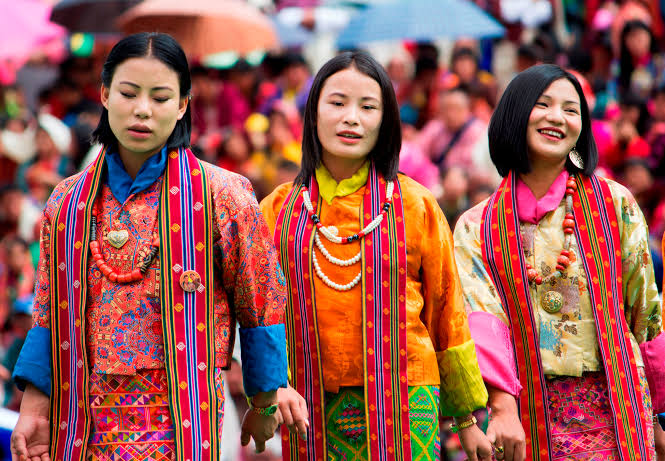
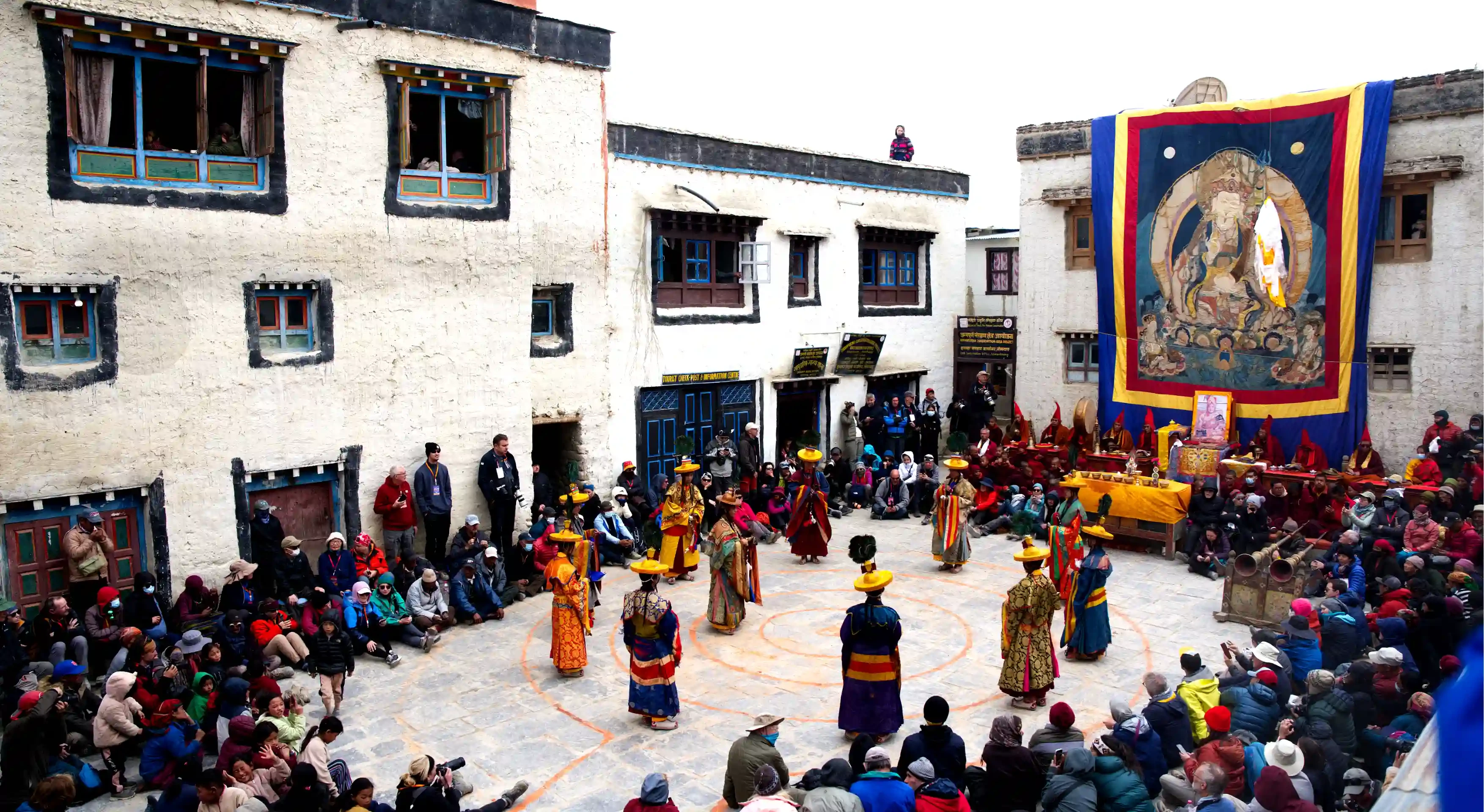
During a Tshechu, sacred mask dances known as Cham are performed by trained Buddhist monks and laymen dressed in elaborate silk brocade costumes and expressive wooden masks. Each dance holds deep spiritual significance—representing the triumph of good over evil, purifying negative karma, and bestowing blessings upon all attendees. Local villagers gather dressed in their finest traditional attire (Gho for men and Kira for women), creating a vibrant atmosphere of community celebration and devotion.
Among the most famous festivals are the Paro Tshechu in spring and the Thimphu Tshechu in autumn, both drawing international visitors to witness the unveiling of giant sacred scroll paintings known as Throngdrel (Thangka). Other unique celebrations include the Punakha Drubchen—featuring dramatic reenactments of 17th-century battles—and the Black-Necked Crane Festival in Phobjikha Valley.
Attending a festival requires advance itinerary planning due to high demand for flights and accommodation. This comprehensive festival guide provides annual lunar calendar dates, festival etiquette guidelines, photography rules, and cultural explanations of key mask dances to enrich your festival experience.
Enter Your Information Below